
We are developing two regulatory B10 cell-based platform technologies that can either enhance or inhibit immune responses.
We are advancing monoclonal antibodies that deplete regulatory B10 cells without destroying other essential B cells to enhance a patient's immune response to cancer and complement current immunotherapies, accelerate immune responses to infection, and act as an adjuvant for vaccines.
Our technology also has the unprecedented ability to expand human regulatory B10 cells ex vivo for use as an autologous (patient-sourced) cellular immunotherapy for autoimmune disease, chronic graft versus host disease (cGVHD), and transplantation, as well as the treatment of immunodeficiency.
Targeted Immune Activation Monoclonal Antibody-Induced B10 Cell Depletion
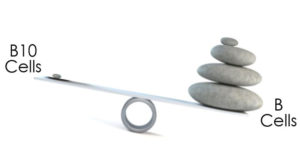
mAb-induced B10 cell depletion intensifies humoral immune responses, cellular and innate immunity, and anti-cancer immune responses.
Targeted Disease Suppression B10 Cell Expansion

Increased B10 cell numbers could help treat chronic graft versus host disease (cGVHD), autoimmune disease, inflammation and contact hypersensitivity.
First-in-Class Immunotherapies
Our B10 cell-directed therapies are unique in their approach, solve unmet clinical needs, and distinguish us from others working in the immunotherapy space. While the importance of B10 cells has been demonstrated in mouse models of inflammation, autoimmunity, solid tumors and infection, they may have additional future applications for the treatment of human disease where effective therapies do not exist.
Cellective‘s technologies and a comprehensive IP portfolio were licensed exclusively from Duke University, including recently issued patents within the field. We have also developed additional novel technology platforms based on these assets, which provide a broad base for future expansion.